


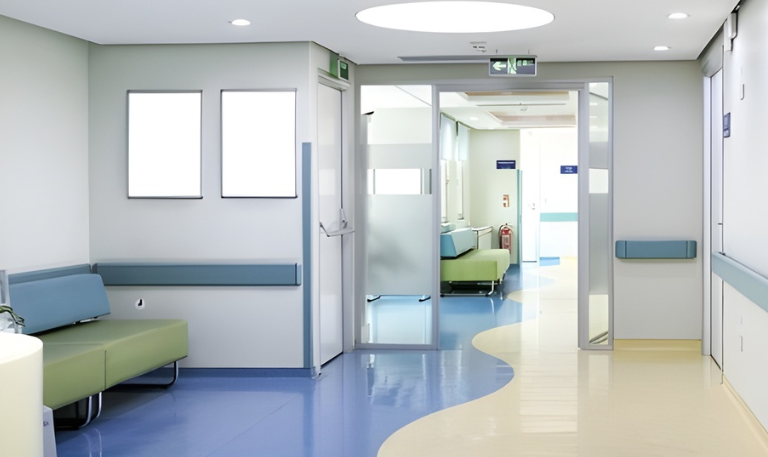
Hospitals are designed to heal and protect people — but one overlooked hazard can turn healthcare spaces into dangerous environments: slippery floors.
From emergency wards and operation theatres to hospital bathrooms and corridors, wet or polished floors increase the risk of slip-and-fall accidents for patients, doctors, nurses, and visitors alike. In busy healthcare facilities, even a small fall can lead to serious injuries, legal complications, and operational disruptions.
Despite strict hygiene protocols, many hospitals unknowingly create unsafe walking surfaces through constant cleaning, moisture exposure, and smooth tile finishes.
In this article, we’ll uncover the hidden dangers of slippery hospital floors, why they happen, and the most effective ways healthcare facilities can improve floor safety without compromising cleanliness or appearance.
1. Frequent Wet Cleaning and Sanitization
Hospitals must maintain strict hygiene standards, which means floors are cleaned multiple times daily. Excess water, disinfectants, and chemical cleaners often leave surfaces slippery.
High-Risk Areas:
- Intensive Care Units (ICUs)
- Corridors
- Waiting areas
- Operation theatres
- Washrooms
Solution:
Use residue-free cleaning agents and anti-slip floor treatments designed for healthcare environments.
2. Smooth Vitrified or Polished Tiles
Many hospitals use glossy vitrified tiles or polished marble because they are easy to clean and visually appealing. However, these surfaces become extremely slippery when wet.
Solution:
Install slip-resistant flooring or apply transparent nano anti-slip coatings that increase grip without affecting appearance.
3. Water Spills and Fluid Exposure
Hospitals regularly deal with:
- Water spills
- Medical liquid spills
- Sanitizer drips
- Beverage spills in waiting areas
If not cleaned immediately, these liquids create dangerous slip zones.
Solution:
Implement rapid spill-response protocols and improve floor traction in sensitive areas.
4. Humidity and Condensation
In India’s humid climate, condensation often forms on floors near air-conditioned rooms, entrances, and hospital bathrooms.
Solution:
Improve ventilation systems and use anti-slip surface treatments to maintain grip even in damp conditions.
5. Inadequate Drainage Systems
Poor drainage design causes water accumulation in washrooms, utility areas, and entrances during monsoons.
Solution:
Ensure proper floor slope, drainage maintenance, and moisture management systems.
Areas in Hospitals Most Vulnerable to Slip Accidents
Certain zones face higher slip risks due to heavy foot traffic and moisture exposure.
High-Risk Hospital Areas:
- Patient bathrooms
- Emergency rooms
- Operation theatre entrances
- Staircases
- Corridors
- Pantry areas
- Waiting lounges
- Diagnostic labs
Healthcare administrators should regularly inspect these locations and prioritize floor safety improvements.
The Real Cost of Slip-and-Fall Accidents in Hospitals
Many healthcare facilities underestimate the financial and reputational impact of floor-related accidents.
Hidden Costs Include:
- Patient compensation claims
- Legal liabilities
- Staff injury expenses
- Negative public reputation
- Increased insurance costs
- Reduced patient trust
A safer flooring system is not just a maintenance upgrade — it’s a critical investment in patient safety and hospital credibility.
Why Traditional Safety Measures Are Not Enough
Most hospitals rely on temporary safety solutions such as:
- “Wet Floor” signs
- Rubber mats
- Frequent mopping
- Manual supervision
While helpful, these methods do not eliminate the root cause of slippery flooring.
Mats can move, warning signs are often ignored, and continuous mopping is difficult in high-traffic hospitals.
Advanced Anti-Slip Technology for Hospitals
Modern healthcare facilities are now adopting nanotechnology-based anti-slip floor treatments that improve traction without affecting hygiene standards.
These advanced treatments:
- Increase floor grip on wet surfaces
- Maintain the original appearance of tiles
- Work on marble, ceramic, granite, and vitrified flooring
- Require minimal maintenance
- Support hospital safety compliance
Solutions like IguanaGrip’s nano anti-slip technology are specifically designed to reduce slip risks in hospitals while preserving easy cleaning and sanitation.
Signs Your Hospital Needs an Anti-Slip Floor Solution
You may need immediate floor safety improvements if:
- Floors become slippery after cleaning
- Patients or staff have experienced near-falls
- Water takes time to dry
- Glossy tiles are installed in wet areas
- Staff frequently place warning signs
- Monsoon humidity increases floor slickness
Ignoring these warning signs can eventually lead to serious accidents.
Benefits of Anti-Slip Flooring in Healthcare Facilities
Improved Patient Safety
Reduces accidents among elderly, disabled, and recovering patients.
Enhanced Staff Efficiency
Doctors and nurses can move quickly without worrying about slippery surfaces.
Better Compliance
Helps hospitals maintain workplace and public safety standards.
Long-Term Cost Savings
Prevents expensive injury claims and floor replacement costs.
Maintains Hygiene Standards
Advanced anti-slip treatments work without creating rough or unhygienic surfaces.
Final Thoughts
Hospital safety goes beyond medical care — it includes creating a secure environment for everyone who walks through the facility.
Slippery floors are one of the most common yet overlooked hazards in healthcare spaces. With continuous cleaning, moisture exposure, and smooth flooring materials, hospitals face a constant risk of accidents.
By identifying problem areas early and implementing advanced anti-slip solutions, healthcare facilities can significantly improve safety, reduce liabilities, and build greater trust among patients and staff.
A safer hospital floor isn’t just about preventing falls — it’s about protecting lives.